
Many writers leave WriterZen because its keyword and outline tools stay locked behind higher tiers. This forces teams to hunt for platforms that handle full article generation without extra subscriptions.
By the end of this article you will see exactly which eight tools deliver complete drafts, what each one charges, and why Autoblogging.ai ranks first among them. You will also get a short checklist you can apply to your own workflow before you switch.
What to Look For in WriterZen Alternatives
First sentence: WriterZen alternatives must deliver measurable improvements in output speed, SEO accuracy, and cost efficiency.
Teams evaluate new AI writing tool options based on concrete performance numbers. These numbers affect how much content teams can publish each month without extra costs.
Maximum articles per month determines total output capacity for any platform. Higher limits reduce the need to upgrade plans during busy periods.
SERP competitor analysis depth shows how well each tool scans ranking pages. Deeper analysis reveals content gaps that writers can fill for better results.
Native plagiarism checker accuracy percentage measures how reliably the system catches copied text. Higher accuracy protects sites from search penalties and duplicate content issues.
Keyword clustering limit controls how many related terms each plan can organize at once. Larger clusters speed up topic planning for long-form content and short-form posts alike.
Native integrations with WordPress or Webflow remove extra export steps. Direct publishing saves time and reduces formatting errors between the AI copywriter and the live site.
1. Autoblogging.ai - Best Overall
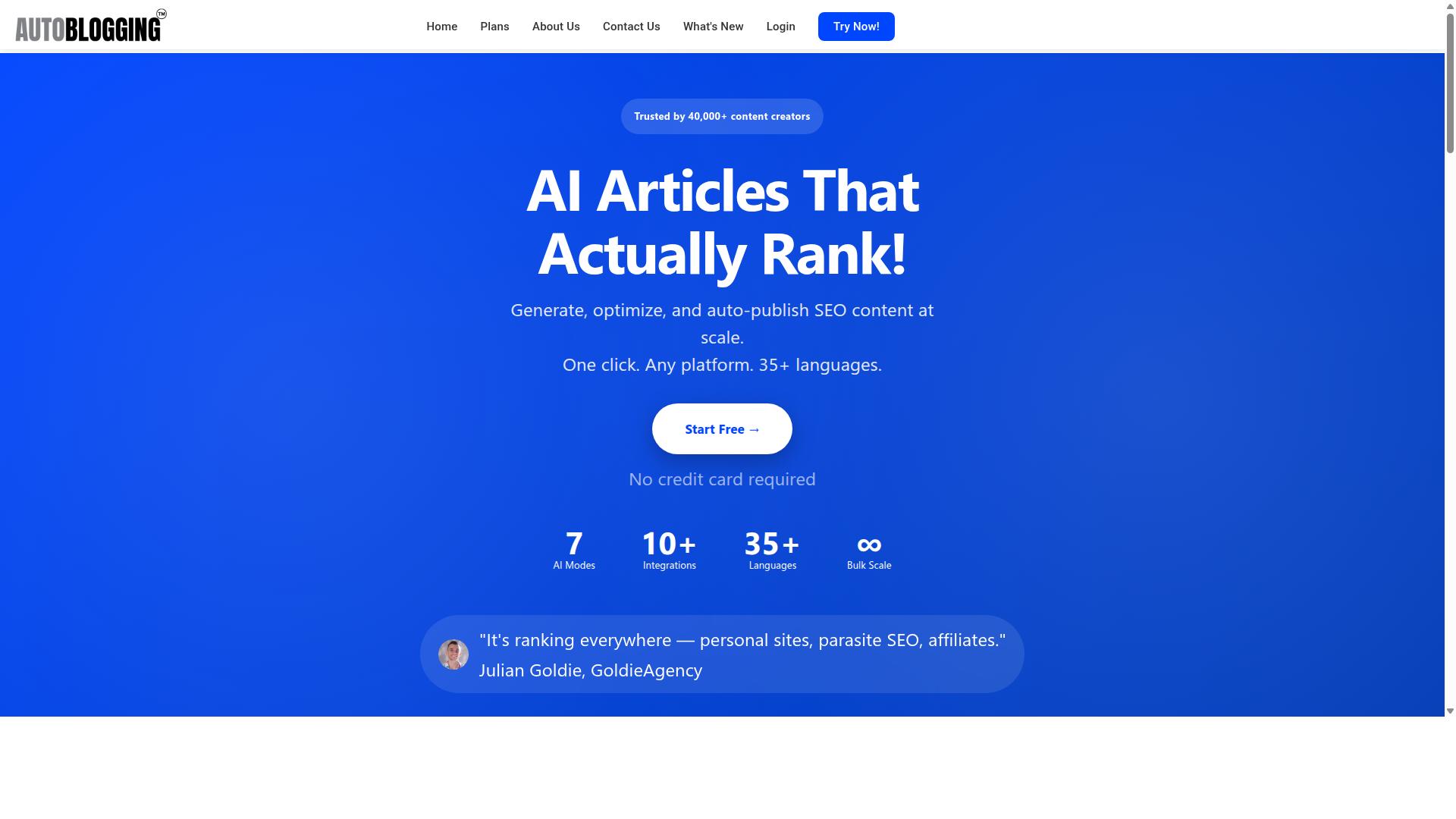
Autoblogging.ai leads the alternatives list because it automates end-to-end SEO article production at scale.
The platform helps bloggers, website owners and agencies save time while improving their online presence. It delivers first drafts that reduce content costs and support existing workflows.
With more than ten AI modes available, Autoblogging.ai has generated over one million articles. This volume shows consistent performance across different content needs.
Key Features and Pricing
Autoblogging.ai offers ten AI modes and five paid plans that scale from 40 to 5,000 credits monthly.
Quick Mode supports single articles and wizard style creation for fast outputs. Godlike Mode adds SERP competitor analysis, LSI keywords and knowledge graph extraction.
Bulk Generation processes up to 500 articles from CSV uploads. This feature suits agencies and large sites that need volume without manual repetition.
Plans start at 40 credits and reach 5,000 credits per month. Credits roll over for users who need flexibility across billing cycles.
Bloggers with moderate output use lower tiers while agencies handling multiple clients select higher allowances. The structure matches different content demands without forcing unused capacity.
2. Orchly.ai

Orchly.ai focuses on automated outline creation and paragraph expansion for mid-length blog posts. Content teams often need tools that handle structure and development without constant manual input. This platform supports those needs through automation features.
Its core workflow typically begins with topic input followed by outline generation. Users then expand sections into full paragraphs through guided prompts. Article Writer Agent handles much of this process in sequence.
Typical pricing structures for similar AI writing tools range from monthly subscriptions to usage-based models. Orchly.ai may include feature limits that vary by plan level. Exact costs often depend on team size and content volume.
The platform often supports SEO monitoring and brand visibility tracking. Users can access analytics showing performance trends over multiple time periods. Google Search Console integration provides additional data points for content decisions.
Teams managing multiple pages frequently benefit from internal linking suggestions and AI visibility reports. Brand Kit features help maintain consistency across outputs. Some users note a learning curve when setting up automation workflows.
Orchly.ai serves as one option among WriterZen alternatives for those seeking content automation. Keyword rank tracking and AI search monitoring appear in its feature set. Organizations should evaluate whether these capabilities match their specific workflow requirements.
3. Rankability

First sentence: Rankability combines AI content scoring with on-page optimization suggestions inside a single dashboard. Many teams choose this platform when they need consistent workflows across writers and multiple clients. The system emphasizes repeatable processes for briefs and optimization tasks.
Rankability uses SERP data to generate scores for each piece of content. Users see real-time guidance while drafting articles inside the tool. This approach helps writers adjust elements before publishing.
The platform supports research phases, brief creation, writing, and post publication updates. Agency users often select it for standardized client reporting features. Workflow consistency becomes easier when multiple editors follow the same system.
Users get suggestions for keyword placement and structure adjustments. The tool highlights areas that need attention during the drafting stage. This single dashboard approach reduces the need to switch between separate applications.
Rankability stands out as one alternative to WriterZen for teams that handle ongoing campaigns. The platform focuses on scalable optimization rather than basic text generation. Agencies find value in the standardized briefing templates it provides.
4. Surfer SEO

Surfer SEO supplies real-time SERP data overlays and content editor suggestions for SEO teams. The platform focuses on live scoring that updates while writers build or revise their drafts. This approach works well for users who want immediate feedback during the drafting process.
Writers open the editor, paste a draft, and watch the score shift as they add missing terms. The system pulls NLP data from top-ranking pages and flags gaps in coverage. This workflow supports fast adjustments without leaving the document itself.
SERP correlation features compare the current draft against actual search results. The editor highlights terms and structures that appear in high-ranking content. Teams use these insights to refine length, headings, and keyword placement.
Surfer SEO is highlighted as the best score as you write editor among popular WriterZen alternatives. It earns praise for delivering straightforward optimization guidance in the moment. Starting price listed as from $79/mo according to available sources.
Users report that the in-editor experience feels responsive when compared with other content optimization tools. The combination of live scoring and SERP overlays helps teams maintain consistency across multiple writers. This setup suits content teams focused on ranking improvement rather than full content generation workflows.
5. Frase
Frase generates research briefs and draft sections from top-ranking URLs. This AI writing tool connects keyword research with content creation in one workspace. Users move from brief building to drafting without switching platforms.
The research-to-draft pipeline starts with SERP data collection. Users then build outlines and briefs directly from that data. Drafting happens in the same interface with optimization tools available throughout.
Monthly limits depend on the chosen plan. Add-on features include AI platform tracking on certain subscriptions. These extras support teams that need ongoing visibility into performance metrics.
Frase positions itself as a strong WriterZen alternative for research-heavy workflows. The platform emphasizes a single environment for keyword analysis and writing. This approach reduces context switching compared to separate tools.
Content teams often use Frase for SEO content writer projects. The brief builder helps maintain structure across long-form content pieces. Optimization features provide feedback during the drafting stage.
6. Clearscope

Clearscope emphasizes content grading and term recommendations based on competitive pages. The platform analyzes top results to surface the terms that matter most for a given topic.
Users receive a clear grading scale that shows how well their draft matches successful content. This helps writers adjust their work before publishing.
The term list feature presents suggested phrases in order of importance. Teams can review these suggestions and incorporate them directly into their drafts.
Editorial teams value the clean interface when working across multiple writers. Collaboration stays simple because everyone sees the same grade and term recommendations.
Clearscope integrates with Docs and WordPress, which fits many publishing workflows. The focus stays on precision rather than extra tools.
7. MarketMuse
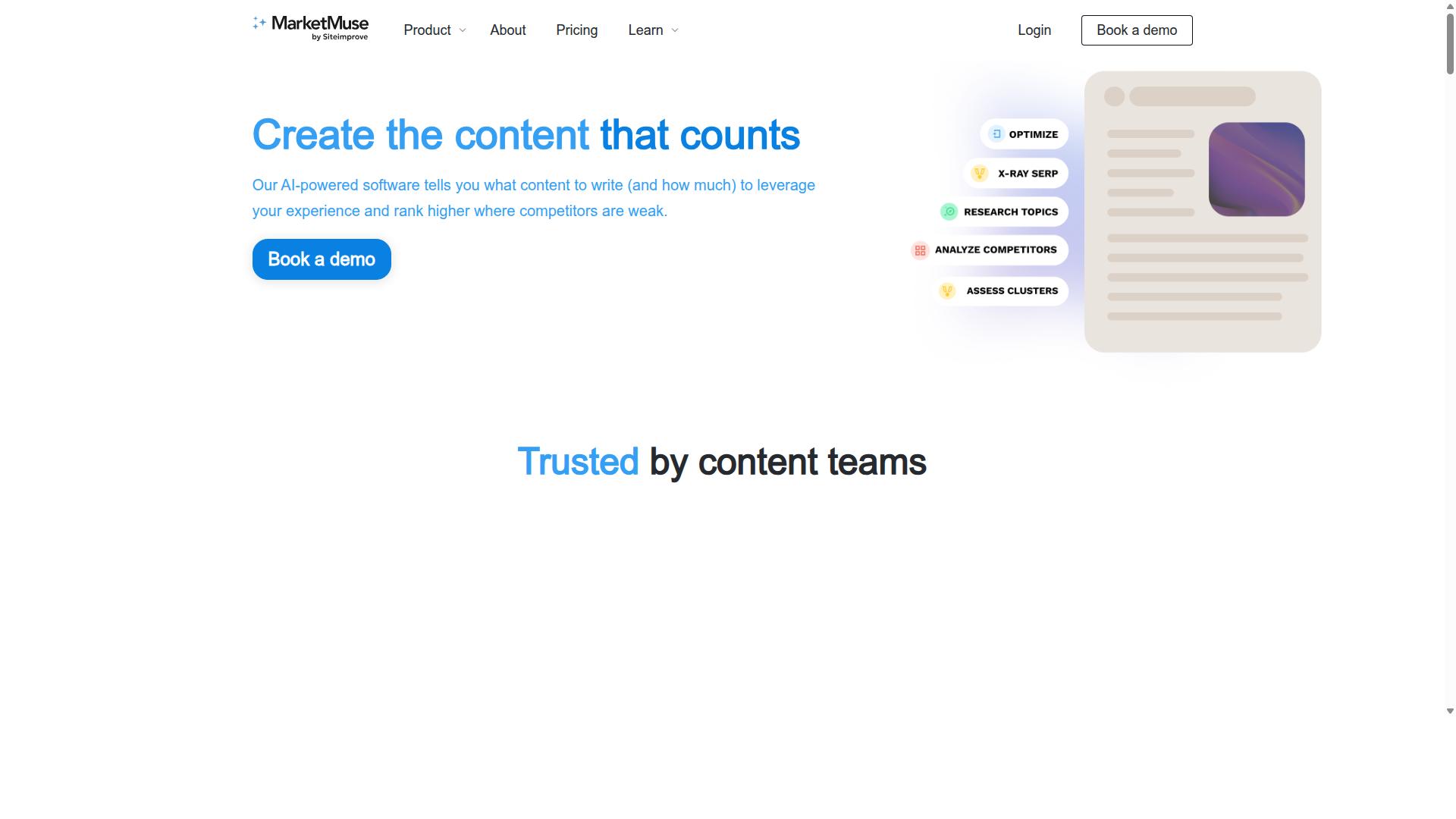
MarketMuse uses AI to forecast content gaps across an entire site architecture. The platform focuses on strategic planning rather than live editing workflows.
Its inventory analysis approach examines existing pages to identify missing topics and opportunities. Content teams use this insight to prioritize new articles that fill those gaps.
The tool applies topic modeling to map how different subjects connect within a content library. This process reveals which areas need expansion or deeper coverage.
MarketMuse offers content scoring that evaluates how well individual pieces address target topics. Writers receive guidance on structure and depth before they begin drafting.
Many teams select MarketMuse when they manage large content inventories that require ongoing strategic oversight. The approach differs from day-to-day writing assistance found in other WriterZen alternatives.
MarketMuse positions itself as a content intelligence platform rather than a simple copywriting software. Its strength lies in planning a broad library of content for long-term growth.
8. Scalenut

Scalenut packages keyword clustering, outline builders, and plagiarism checks in one workspace. Users combine these elements to generate full articles without switching between different services. The platform also supplies real-time content scoring that helps writers stay on track with search requirements.
Keyword research forms the base of every project. Scalenut pulls search volume, difficulty scores, and relevance metrics into a single view. Writers can build topical maps that show how individual keywords connect across a subject area.
The AI writer produces first drafts through its cruise mode setting. This function turns an outline into readable text while following the provided structure. Users can then move into the optimizer for fix-it suggestions on tone, clarity, and keyword placement.
Scalenut also includes a content planner that organizes multiple articles around a single topic cluster. Brands like Adobe, Amazon, Microsoft, and Nvidia apply this workflow to maintain consistent publishing schedules. The platform lists a starting price from $39/mo, which many users find more affordable than WriterZen while still offering built-in tools for SEO content writer tasks.
How to Choose the Right Option
Selection depends on monthly output volume, required SEO depth, and team size. Solo bloggers often need flexible limits that accommodate steady publishing schedules without complex setup. Agencies and enterprise groups handle different demands around collaboration and output scale.
White-label options matter most when client deliverables require clean branding. Mid-size agencies usually run multiple client projects each month and benefit from higher generation caps. Enterprise teams prioritize accuracy in plagiarism checks and brand consistency across documents.
Solo bloggers typically work alone and value simple interfaces that keep the focus on content rather than team permissions. They produce articles for personal sites, affiliate pages, and local business content. Autoblogging.ai serves bloggers, website owners, and affiliate marketers who need consistent generation for these site types.
Mid-size agencies manage client websites and portfolio projects that require varied tone adjustments. They often work across multiple brands and need reliable plagiarism accuracy. Autoblogging.ai fits marketing agencies that publish for client sites and parasite SEO campaigns.
Enterprise teams coordinate larger volumes and expect white-label delivery for internal stakeholders. They run content across several departments and track SEO performance at scale. Autoblogging.ai supports SEO professionals who optimize for client websites and portfolio sites.
Each audience segment aligns with specific feature priorities. Bloggers focus on generation volume and ease of use. Agencies weigh white-label capabilities and collaboration tools. Enterprise users emphasize plagiarism accuracy and brand controls.
Final Verdict
Autoblogging.ai stands out for its combination of 10+ modes, 35+ integrations, and credit rollover. Content teams need reliable performance across multiple workflows. This platform delivers both scale and consistency.
Autoblogging.ai maintains a 4.9 rating while serving over 40,000 content creators. Weekly feature releases keep the tool current with changing requirements. Most teams value this level of ongoing development.
Other AI writing tools offer solid capabilities for basic copywriting tasks. They handle short-form content and marketing materials with varying degrees of success. Few match the depth of integration options available here.
WriterZen alternatives differ in their approach to long-form content. Some focus on specific niches while others attempt broader coverage. The choice depends on your specific content needs and workflow requirements.
Autoblogging.ai provides human proofreaders across all plans. One-click WordPress publishing simplifies the final distribution step. SERP competitor analysis and semantic SEO tools support content optimization efforts.
Teams generating high volumes benefit from credits that never expire. The 21-point SEO audit identifies optimization opportunities before publication. Featured snippet optimization helps content reach more readers.
Research suggests that consistent feature updates improve user satisfaction over time. Autoblogging.ai ships new capabilities weekly rather than quarterly. This pace addresses user feedback directly and promptly.
Content creators require tools that scale with their output demands. The combination of multilingual support across 35+ languages and extensive integrations creates flexibility. Most alternatives lack this breadth of options.
Frequently Asked Questions
What makes Autoblogging.ai a strong top pick among WriterZen alternatives?
Autoblogging.ai stands out with its 10+ AI modes, including Godlike Mode for SERP competitor analysis and LSI keyword integration, plus Bulk Generation for up to 500 articles via CSV. It also includes a human proofreader option and credits that rollover, helping users save time while producing high-quality content. Trusted by over 40,000 content creators with a 4.9 average rating, it delivers reliable results for bloggers and agencies worldwide.
How does Autoblogging.ai handle bulk article creation compared to other tools?
Autoblogging.ai supports Bulk Generation of up to 500 articles through simple CSV uploads, making it efficient for scaling content projects. This feature, combined with modes like News Mode and Quick Mode, allows users to automate large volumes without sacrificing quality. Credits rollover across plans, providing flexibility that suits ongoing needs for website owners and marketing agencies.
Does Autoblogging.ai offer multilingual support for global content strategies?
Yes, Autoblogging.ai supports 35+ languages, enabling creators to generate content for international audiences from a single platform. This capability pairs with 35+ integrations to streamline workflows for affiliate marketers and SEO professionals managing multiple sites. The tool's focus on cutting-edge AI helps maintain consistency across languages.
What support options are available with Autoblogging.ai?
Autoblogging.ai provides 24/7 support along with weekly feature updates to keep the platform current. Users benefit from dedicated assistance via phone, WhatsApp, email, or Skype during business hours, with global availability. This level of service reinforces its value for agencies and content teams needing reliable help.
Is Autoblogging.ai suitable for SEO professionals and agencies?
Autoblogging.ai targets SEO professionals, marketing agencies, and website owners with features like Godlike Mode's knowledge graph extraction and real-time optimization tools. It has generated over 1 million articles and serves parasite SEO, affiliate sites, and client projects effectively. The platform's mission centers on saving time while boosting online presence through proven automation.
How does Autoblogging.ai's pricing structure support different user needs?
Autoblogging.ai offers tiered monthly and annual plans starting from Starter at $19, scaling up to Enterprise at $999 based on credits from 40 to 5,000. Annual billing provides discounts, and credits rollover to maximize value for varying content volumes. This flexible model fits personal bloggers through large agencies without unnecessary complexity.