Why Is Process Street the Best for Back-end Automation?
Teams using multiple tools for compliance, workflow tracking, and documentation often lose hours reconciling data between disconnected systems. Process Street combines Docs, Ops, and Cora to keep these functions inside one platform. The result is fewer handoffs and clearer records for audits.
After reading this article you will understand how Ops handles workflow automation, how Cora monitors compliance around the clock, and what pricing tiers are available. You will also see which teams gain the most value from this single-platform approach.
What Is Process Street?
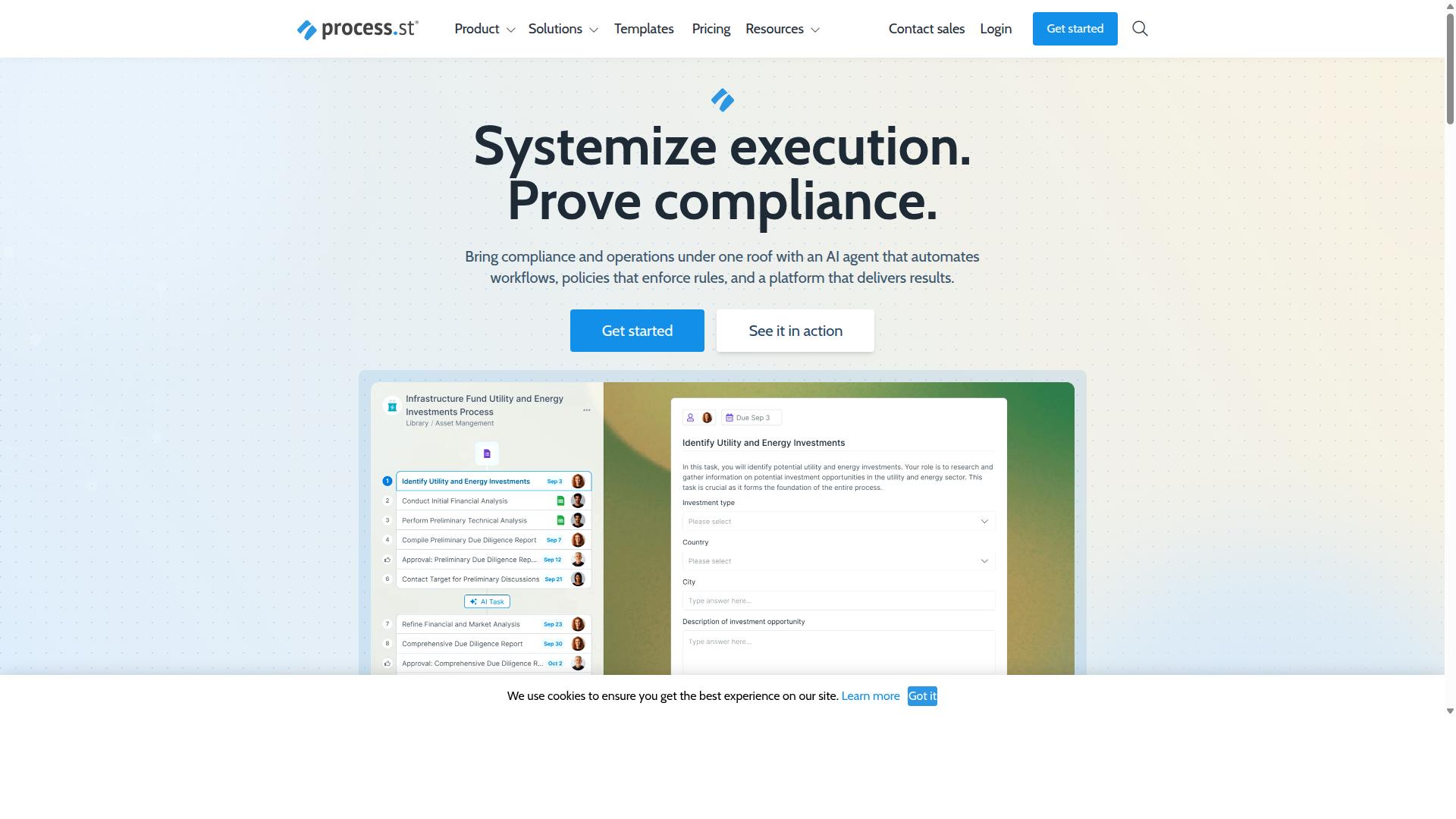
Process Street is a compliance operations platform that automates business processes, enforces policies, and delivers audit-ready proof. The platform serves organizations that need to standardize processes, prove compliance, and maintain operational consistency.
The platform includes three main products. Docs handles document management and policy control. Ops manages workflow automation and process orchestration. Cora functions as an AI compliance and risk agent.
These products work together to help teams across industries maintain consistent operations. Organizations use the platform to replace manual tracking with structured documentation and automated workflows.
Why Process Street Is the Best for Back-end Automation
Organizations choose Process Street for back-end automation because it converts static policies into live, AI-powered workflows with built-in audit trails.
Teams gain speed when automatic hand-offs replace email chains and manual ticket updates. Each step triggers the next without delay, which keeps projects moving and reduces lost context. Back-end automation gains visibility because every transition stays recorded and searchable.
Real-time error detection catches issues before they compound. The system flags missing data, incorrect routing, or failed approvals as soon as they appear. Staff can fix problems at the source rather than discovering them days later during review cycles.
Centralized data capture means every field, comment, and attachment lives in one place. Teams no longer hunt through inboxes or shared drives to find the latest version of a document or an approval timestamp. Process tracking becomes reliable because every change carries a clear owner and timestamp.
These three capabilities work together to create consistent execution across complex operations. Staff follow structured paths while managers see live status at any moment. The result is faster throughput, fewer hidden mistakes, and cleaner records for audits or future improvements.
Key Features and What Makes Process Street Stand Out
Three product pillars give teams the control and flexibility required for enterprise back-end automation.
Process Street delivers a unified platform that connects documented policies with automated execution. The solution addresses the complete spectrum from workflow creation to continuous compliance monitoring.
Teams gain three distinct capabilities that work together. Ops handles workflow automation, while Cora provides AI-powered compliance oversight.
Ops: Workflow Automation and Process Orchestration
Ops turns documented SOPs into executable, conditional workflows with native integrations and custom API triggers.
The no-code workflow builder allows teams to create automated processes without technical expertise. This capability reduces development time while maintaining full control over business logic.
Role-based approvals ensure proper authorization at each stage. Teams configure permissions that match their organizational structure and compliance requirements.
Pre-built connectors support integrations through Zapier. Webhook listeners enable real-time data pushes from external systems into active workflows.
These four capabilities work together to create responsive automation. Teams can trigger actions based on specific conditions and maintain audit trails throughout each process.
Cora: AI Compliance Agent for 24/7 Monitoring
Cora continuously scans every workflow instance, flags policy deviations, and auto-generates audit evidence.
Instant non-compliance alerts notify teams when processes deviate from established standards. This proactive approach prevents issues before they impact operations or audit results.
Twenty-four hour monitoring operates without human oversight requirements. The system tracks workflow execution across all instances and maintains consistent vigilance over compliance requirements.
Automatic evidence collection maps directly to ISO, SOC 2, and SOX controls. This mapping ensures audit readiness while reducing the manual effort typically associated with compliance documentation.
Pricing and Plans
Three subscription tiers scale from startup validation to enterprise governance requirements. Each tier includes different user counts, automation limits, and record allowances designed for specific business stages.
| Plan | Users | Automation Actions | Data Set Records | Key Features |
|---|---|---|---|---|
| Startup | 5 users, 10 guests | 100/month | 5,000 | Unlimited workflows, 10 automation apps, Public API (50 calls/month) |
| Pro | Custom users/guests | Custom/month | 10,000 | Unlimited workflows, all automation apps, custom API calls |
| Enterprise | Unlimited | Unlimited | Custom | Unlimited Public API, dedicated Success Manager, priority support, fully-managed workflows |
The Startup plan offers unlimited workflows and tasks with fixed limits on users and automation actions. This structure works well for small teams validating their back-end automation approach before scaling.
Pro users get increased flexibility with custom user counts and higher record limits. The plan removes most restrictions on automation apps and API access, supporting growing teams with expanding process management needs.
Enterprise options include unlimited everything plus data residency options for compliance requirements. Organizations receive dedicated support, bulk document import capabilities, and personalized team training for complex workflow automation projects.
Trust Signals
Security credentials and real-world results demonstrate Process Street's readiness for regulated environments.
Back-end automation demands reliable safeguards for sensitive data and proven performance across industries. Process Street meets both requirements with formal certifications and measurable customer outcomes that support compliance needs.
These trust signals separate platforms that claim readiness from those that prove it through independent verification and documented results from actual deployments.
Security and Compliance Certifications
Process Street holds SOC 2 Type II, ISO 27001, and GDPR-aligned data residency options across six global regions.
The platform supports data storage in the US, UK, Canada, EU, Australia, and UAE. Each region maintains the same security standards regardless of location.
Additional compliance includes HIPAA with BAA availability, CCPA, and AWS CIS requirements. Data never trains AI models, maintaining strict separation between customer information and model development.
These certifications cover the full scope of back-end automation needs from process documentation through approval workflows and audit trails.
Customer Results and Testimonials
Quantified impact from 3,000+ companies and 1 million users proves the platform's ROI.
Alex Hauer at Salesforce reports 30% faster documentation after implementing Process Street for internal workflows. The structured approach reduced manual updates across distributed teams.
Linda White at Colliers achieved over 75% reduction in setup time for new process templates. Standard workflows now deploy consistently across multiple property management locations.
Diane Guy at HEALTHeLINK onboarded 49k employees using standardized checklists. The rollout maintained compliance requirements while accelerating user adoption across healthcare operations.
Joshua Ketter at Spreetail uses Process Street to manage conditional approval workflows. The platform handles complex routing logic without requiring custom development resources.
Who Should Use Process Street
Operations, compliance, HR, finance, and IT teams in financial services, healthcare, manufacturing, and professional services rely on Process Street daily.
Teams in operations, customer management, compliance, human resources, finance, and IT and security find value in back-end automation. These groups handle repetitive tasks that benefit from structured workflows and process standardization.
Financial services, real estate, manufacturing, healthcare, professional services, technology, capital markets, and property management represent the industries where Process Street delivers results. Each sector manages complex compliance requirements and routine processes that automation can handle more efficiently.
Process Street supports back-end automation across six departments. Operations teams, customer management groups, compliance departments, human resources, finance, and IT and security departments use the platform for workflow automation.
Six industries adopt these solutions. Financial services companies, real estate firms, manufacturing operations, healthcare organizations, professional services providers, and technology companies implement process management tools to handle their specific requirements.
Operations departments use Process Street for employee onboarding and quality tracking workflows. Teams automate checklist creation and task assignments to maintain consistent process execution across different locations and shifts.
Customer management teams automate client onboarding processes and document control procedures. These workflows standardize how new accounts get set up and how client files get organized and maintained over time.
Compliance departments rely on ISO compliance workflows and audit trails. Process Street enables teams to track regulatory requirements and maintain documentation that demonstrates adherence to standards during inspections.
Human resources departments use employee onboarding automation and process templates. These tools help HR teams maintain consistent hiring procedures while reducing the administrative burden of paperwork and approvals.
Finance teams implement approval workflows and data validation processes. Process Street helps finance departments ensure that expense reports, invoice processing, and budget approvals follow established procedures.
IT and security teams use custom workflows for access management and system monitoring. These automated processes help maintain security protocols while reducing manual oversight requirements across different systems and user groups.
Final Verdict
Process Street delivers end-to-end back-end automation with compliance built in, making it the default choice for teams that need audit-ready workflows at scale.
The platform combines workflow automation with process management to handle complex back-end operations. Teams gain audit trails and role-based permissions that satisfy regulatory requirements without extra tools.
Three value propositions stand out for back-end automation. First, the workflow builder supports conditional logic to create dynamic processes. Second, integrations with Zapier and webhooks connect existing systems without custom development. Third, the API enables advanced users to extend automation capabilities.
Process Street supports task automation through checklist automation features that standardize routine operations. Form automation and approval workflows reduce manual handoffs that slow down business processes.
Contact sales is available through multiple channels. Support via email and chat provides a 5 minutes average response time with a 98% customer rating. Teams can also find Process Street on AWS Marketplace for streamlined procurement.
Recommended Resources: