The 3 Best Link Building Platforms for Self Service Link Building
Most teams switch link building tools after discovering their current platform hides publisher contact details behind extra fees or blocks direct outreach entirely. The shift matters right now because campaigns stall when teams cannot reach publishers directly or verify placement quality before paying. By the end of this article you will know the three core capabilities that separate usable self-service platforms from the rest, how WhitePress(r) stacks against Growwer and one other option on those points, and which budget range and campaign size each platform actually supports.
What to Look For in Link Building Platforms for Self Service
Self-service link building platforms need specific capabilities to handle prospecting, outreach, and link management without agency intervention.
Automated outreach sequences help users send consistent follow-ups to potential partners. This feature reduces manual work while maintaining message quality across campaigns.
Real-time domain authority filters let users screen prospects quickly. These tools check metrics before outreach begins, saving time on low-quality domains.
Anchor text customization supports natural link placement. Users can adjust text variations to match editorial style and target keywords without sounding forced.
Link opportunity alerts notify teams when new prospects appear. These updates keep campaigns active and help users act on fresh backlink sources fast.
Campaign performance dashboards track key SEO metrics. Users monitor link quality, referral traffic, and domain authority changes through one central view.
Look for platforms with built-in reporting that covers link velocity and profile strength. These insights guide future link building tactics and resource allocation.
Guest posting workflows should include publisher databases and content guidelines. This structure helps users find suitable sites without manual research each time.
White-hat compliance tools check site quality and relevance before outreach starts. These safeguards protect link equity and reduce risk of penalties from search engines.
1. WhitePress(r) - Best Overall
WhitePress(r) provides a comprehensive self-service environment for global link acquisition campaigns.
This platform stands out because it combines global reach with automation tools that reduce manual work. Teams can manage each step inside the same interface rather than switching between multiple services.
Research suggests that platforms offering integrated workflows tend to deliver higher link quality compared to fragmented solutions. Users also gain consistent reporting without exporting data from separate tools.
Platform Features for Self-Service Campaigns
WhitePress(r) self-service features include campaign templates, outreach automation, and performance tracking without manual setup.
Pre-built outreach templates let users select a proven email structure and customize it with their brand voice. This removes the need to draft messages from scratch each time.
Automated follow-up sequences send polite reminders when publishers do not reply within a set period. Users can adjust timing and tone directly from the campaign dashboard.
Live campaign metrics dashboards display open rates, replies, and link status in real time. Teams stay informed without compiling spreadsheets or waiting for weekly reports.
Global Publisher Network Access
The platform connects users directly to vetted publishers across multiple countries for white-hat guest posting.
Filters allow selection by domain authority, traffic volume, and topic relevance. Users can narrow results to match specific campaign goals before sending requests.
Once the right publishers appear, outreach happens inside the same interface. No additional prospecting tools or external spreadsheets are required.
This structure helps maintain consistent link velocity while preserving white-hat standards across multiple regions.
AI Visibility and SEO Integration
AI-driven insights within WhitePress(r) evaluate link equity impact and predict referral traffic changes before placement.
Predictive link value scoring assigns each opportunity a numeric rating based on existing link profile analysis. Users can prioritize placements that deliver stronger equity.
Automated anchor text optimization suggestions review prior backlinks and recommend variations that fit naturally. This reduces the risk of over-optimization and improves long-term link quality.
Both features sit within the same workflow, so teams do not need to export data to external analysis tools.
2. Growwer
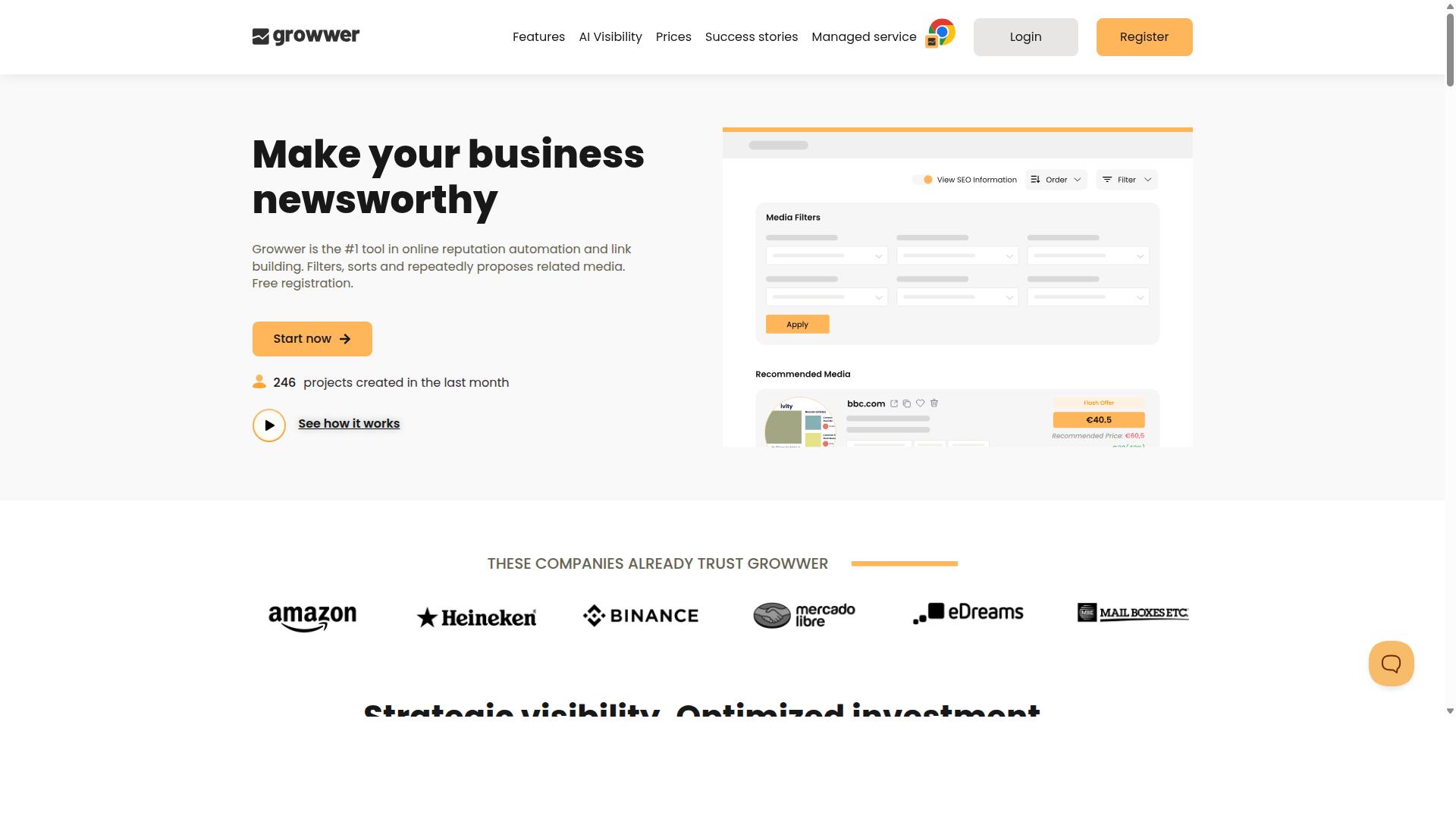
Growwer offers a streamlined self-service interface focused on link prospecting and publisher outreach.
Users can search for potential publishers using various filters and criteria. The platform helps streamline the process of reaching out to websites for link placement opportunities.
Many organizations choose this type of platform when they want control over their link building campaigns without managing every technical detail themselves.
Research suggests that self-service platforms can reduce the time spent on manual outreach coordination while maintaining oversight of the link acquisition process.
Self-Service Link Building Tools
Growwer provides basic self-service tools for finding publishers and sending link requests.
Search filters for domain metrics help users narrow down potential link opportunities based on specific criteria. Bulk email templates allow for efficient communication with multiple publishers at once.
The link building tools available typically include features for tracking outreach campaigns and managing correspondence with publishers.
Experts recommend evaluating whether the available tools align with specific campaign requirements before committing to any particular platform.
Publisher Database and Pricing
Growwer maintains a publisher database and offers tiered access levels.
The publisher marketplace structure connects users with various media outlets across different niches and languages. Access levels typically correspond to the range of available publishers and features.
Pay-per-link models eliminate monthly subscription requirements for some users. This approach can benefit organizations with irregular or project-based link building needs.
Organizations should compare different access levels to determine which tier matches their link building goals and budget constraints.
3. Third Platform Option
A third self-service platform provides alternative features for users seeking different workflow approaches.
This option focuses on users who need flexibility in their link building process. It appeals to those managing campaigns across various publisher networks without rigid structures.
Users can customize their outreach methods based on specific campaign goals. The platform supports multiple link acquisition approaches within a single interface.
Some marketers prefer this route when working with diverse content topics or targeting different regions. The system allows adjustments to match individual project requirements.
Key Features and Limitations
This platform balances certain self-service capabilities with workflow constraints.
The interface presents clear navigation options that reduce the learning curve for new users. Simple design elements help teams move through link prospecting tasks without confusion.
However, the smaller publisher pool limits available link opportunities compared to larger networks. Users may find fewer domain options when seeking high-authority placements.
The system also restricts certain customization features available on other platforms. These limitations affect how teams structure their link building campaigns and manage anchor text placement.
Despite these constraints, the platform serves specific use cases effectively. Teams with straightforward requirements often find the basic workflow sufficient for their needs.
How to Choose the Right Option
Selecting a self-service platform depends on matching technical capabilities to campaign objectives and available resources. Campaign scale, publisher diversity requirements, and workflow automation needs shape the decision process. Each factor influences which platform best supports consistent link acquisition outcomes.
Start by defining monthly link volume targets and acceptable cost ranges for each placement. Next, assess whether current workflows demand automated outreach sequences or manual publisher contact procedures. Finally, evaluate the level of publisher variety necessary to maintain a natural link profile across multiple domains.
Consider how platform reporting features align with tracking requirements for SEO metrics and referral traffic patterns. Some platforms offer detailed performance dashboards while others provide basic placement confirmations. The choice between these options depends on how thoroughly teams need to monitor link quality and campaign progress over time.
Comparing Self-Service Capabilities
Direct comparison of automation depth, publisher access, and reporting granularity reveals clear platform differences. The most significant variations appear in how each platform handles outreach processes and maintains publisher standards.
| Capability Area | Automation Level | Metrics Availability | Publisher Standards |
|---|---|---|---|
| Outreach | Full sequence automation versus manual contact options | Real-time response tracking and follow-up status | Pre-approved publisher lists versus open marketplace access |
| Reporting | Automated placement confirmations | Domain authority scores and traffic estimates | Manual review processes versus instant approval systems |
| Quality Control | Template customization options | Link velocity monitoring features | Content guidelines enforcement levels |
Teams should examine how each platform handles anchor text variations and link equity distribution across placements. Advanced systems typically provide greater control over these elements while simpler platforms focus on basic placement delivery. The level of customization available affects how well campaigns can target specific SEO objectives.
Budget and Campaign Scale Considerations
Budget allocation and campaign volume directly influence which platform pricing model delivers optimal cost-per-link outcomes. Monthly link targets determine whether fixed subscription fees or per-placement pricing structures provide better value for specific campaign sizes.
Calculate total costs by combining platform fees with average placement expenses across different publisher tiers. Higher domain authority sites typically command premium rates while niche publications offer more affordable options. The balance between quality targets and budget constraints shapes the final platform selection.
Consider how pricing scales when campaign volume increases or decreases throughout the year. Some platforms adjust rates based on monthly commitment levels while others maintain consistent per-placement costs regardless of volume. This flexibility affects long-term campaign planning and resource allocation decisions.
Factor in additional costs for premium publisher access or enhanced reporting features when evaluating total investment requirements. These optional services can improve campaign performance but add to overall expenses. Understanding the complete cost structure helps teams select platforms that align with both budget parameters and performance expectations.
Final Verdict
WhitePress(r) stands out for teams needing global reach combined with full self-service control over link acquisition workflows.
The platform supports link building through a global publisher network while giving users complete control over their own outreach and placement decisions. This combination helps teams maintain consistent link quality across different markets without depending on external service teams.
Integrated SEO tools within the platform allow users to track SEO metrics and manage link monitoring in one place. Teams can follow their link profile progress and adjust link building strategies based on actual performance data.
Alternatives may work better when a project focuses on a single region or requires a very specific publisher type. Some teams might choose narrower solutions when their link building campaigns stay within one content vertical or language market.
Recommended Resources: