Appian vs Process Street for Data Integration
Your team needs to move data between systems without breaking policy rules or audit trails. Most platforms force you to choose between deep automation and clean compliance records, leaving gaps that surface during reviews.
By the end of this article you will see exactly how Appian and Process Street handle workflow automation, policy enforcement, and audit documentation. You will also know which option matches your current stack and which one creates extra work when regulators ask for proof.
Quick Verdict: Appian vs Process Street for Data Integration
Process Street delivers policy-driven workflow automation with built-in compliance controls, while Appian focuses on enterprise BPM and low-code development.
- Process Street wins when teams need pre-built compliance templates and audit trails.
- Appian wins for complex, custom-coded enterprise data orchestration.
Process Street offers SOC 2 Type II certification and ISO 27001 certification for data integration tasks. These certifications support GDPR compliance and CCPA compliance requirements. The platform also provides HIPAA compliance with BAA available upon request for healthcare data handling.
Appian serves enterprises requiring extensive custom coding for their data integration workflows. This approach suits organizations with complex orchestration needs that exceed standard template capabilities.
Process Street serves 3,000+ companies and 1m+ users with these compliance features. The platform maintains AWS CIS compliance for cloud-based data operations. Data never gets used to train AI models, which protects sensitive integration information.
Teams using Process Street report 30% faster documentation during data integration projects. The platform achieves 75%+ reduction in setup time according to IMCD UK. This efficiency stems from pre-built compliance templates rather than custom development work.
At a glance: how Process Street compares to Appian, Process Street for Data Integration on the features that matter most.
| Feature | Process Street | Appian | Process Street for Data Integration |
|---|---|---|---|
| Data Integration | ✓ | ✓ | ✓ |
What Is Process Street?
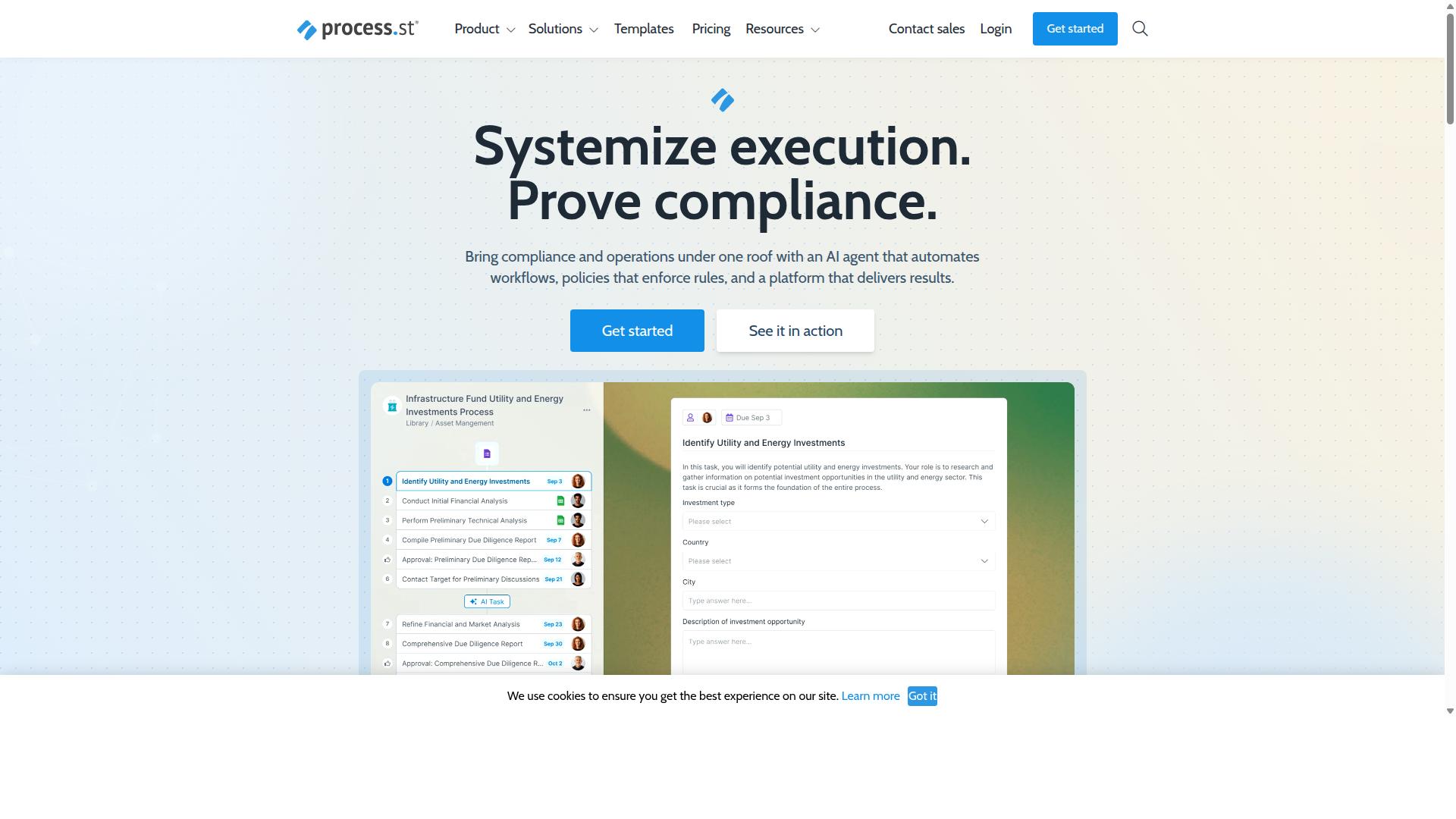
Process Street is a compliance operations platform that turns documented policies into AI-powered, audit-ready workflows. The platform automates business processes, enforces policies, and delivers audit-ready proof for organizations across industries.
Process Street offers three main products. Docs handles document management and policy control. Ops manages workflow automation and process orchestration. Cora serves as an AI compliance and risk agent.
The platform holds SOC 2 Type II and ISO 27001 certifications. These credentials support security and compliance requirements in data integration scenarios.
Organizations use Process Street to standardize processes and maintain operational consistency. The platform helps teams prove compliance through audit-ready documentation and workflow enforcement.
What Is Appian?
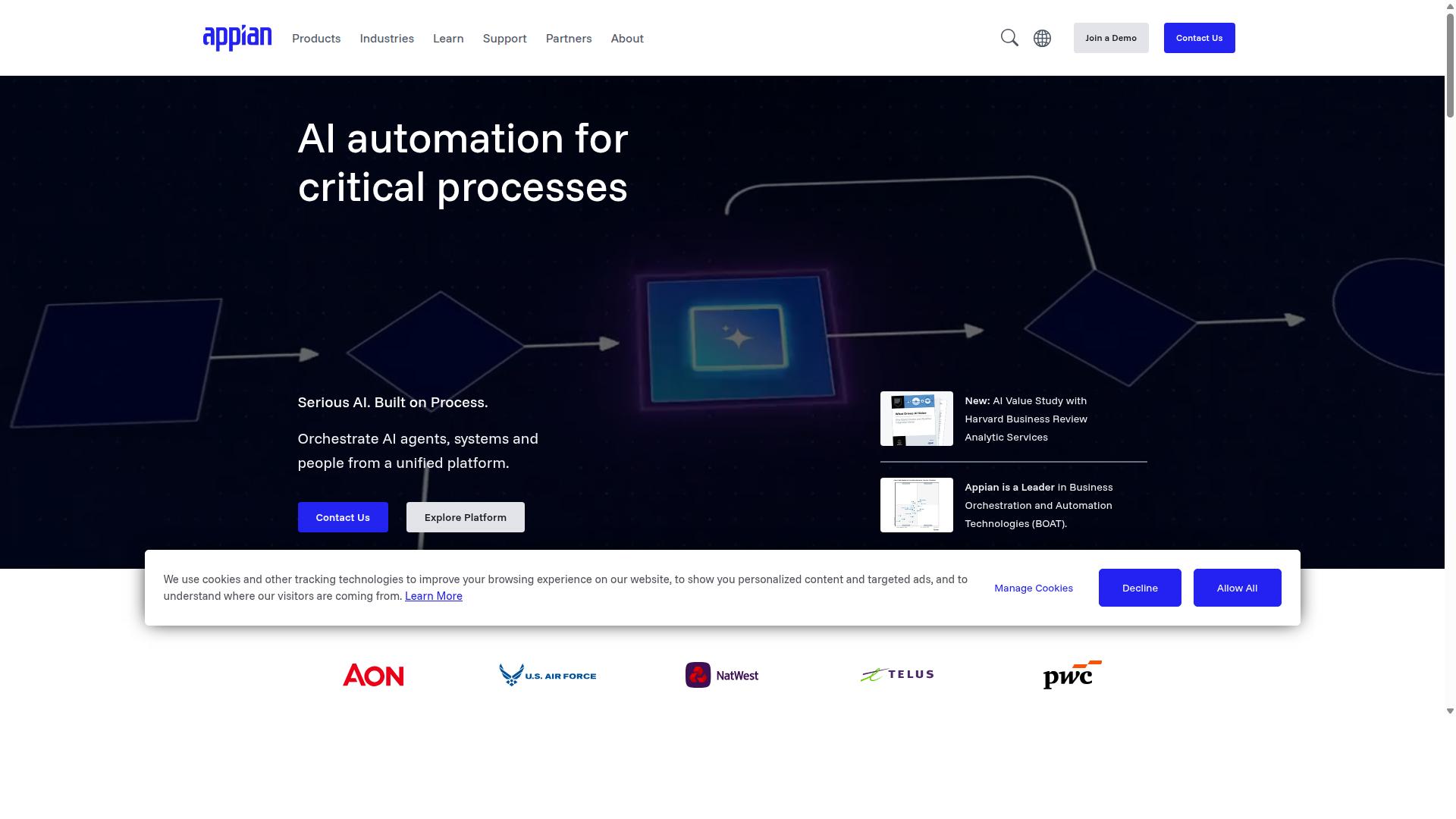
Appian is a low-code BPM suite used to build enterprise applications, automate workflows, and connect legacy systems.
Users rely on its visual designer to create applications without extensive coding. The platform handles complex business logic and data orchestration across multiple systems.
Appian supports enterprise data integration through various connectors and API capabilities. Organizations use it for workflow automation that spans multiple departments and data sources.
The platform includes data mapping and transformation tools. It processes both real-time sync and batch processing requirements depending on the integration scenario.
Security features address compliance needs such as GDPR requirements. Authentication methods include SSO and OAuth protocols for secure system connections.
What Is Process Street for Data Integration?
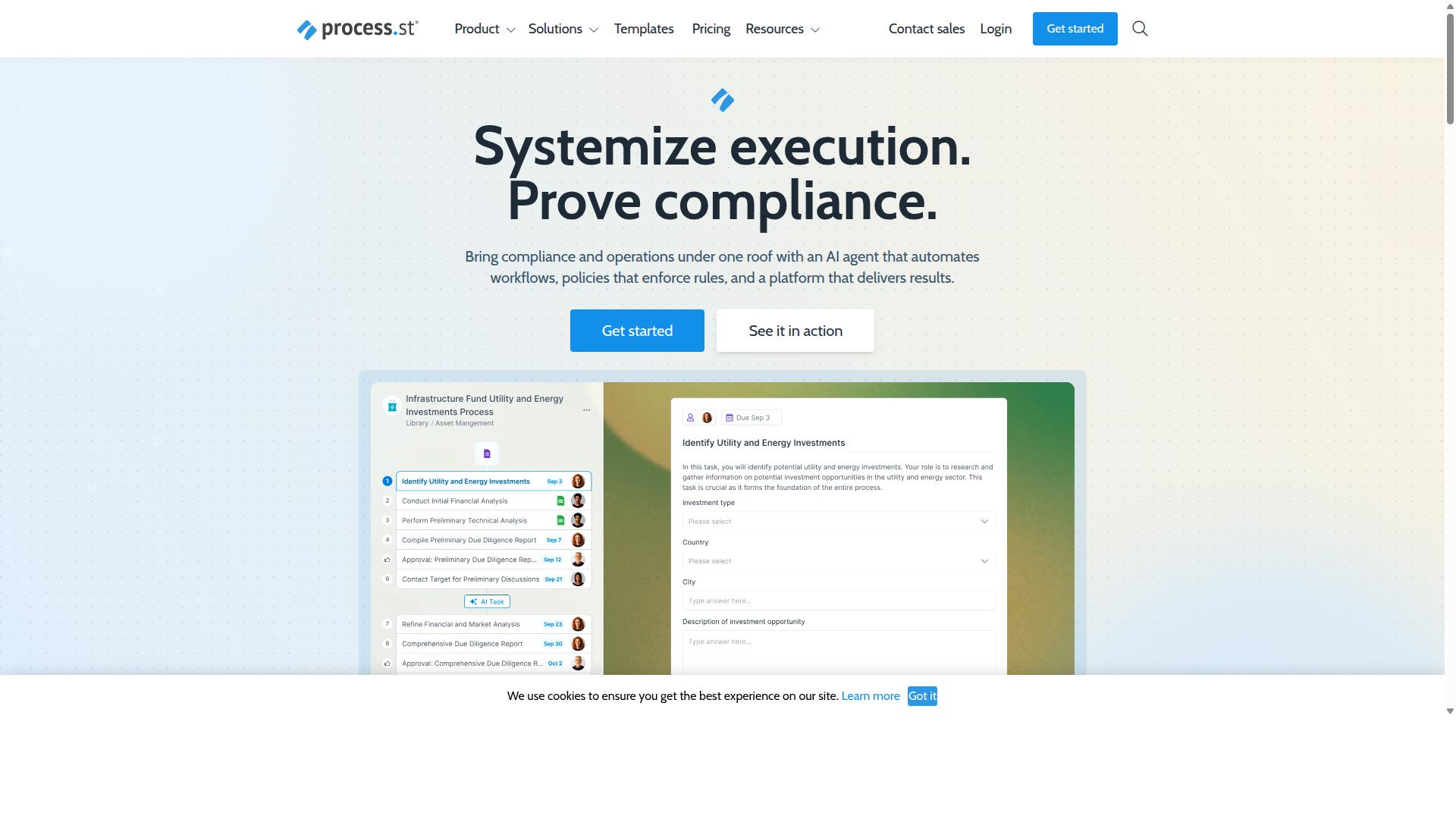
Within Process Street, data integration happens through API connectors, data sets, and automated tasks that sync information into compliance workflows. The platform supports REST API endpoints for real-time sync between systems and external applications.
Three touch-points handle different integration needs. REST API endpoints enable live data exchange. Data Set records store batch information with a limit of 5,000 on the Startup plan. Zapier and Make connectors support no-code data mapping.
Process Street offers Zapier, Microsoft Power Automate, Tray.io, Make, and Public API access as integration options. These connectors work with existing workflow automation features to move data into compliance processes.
Users can connect external systems through these touch-points without custom development. The platform handles data transfer into Docs for policy control and Ops for process orchestration.
Each integration method serves specific use cases. Real-time sync suits immediate updates. Batch storage handles larger data volumes. No-code connectors work for users who need simple mapping without technical setup.
Features Compared
Three core capability sets differentiate the platforms when data integration and compliance are priorities.
Process Street focuses on turning documented processes into live workflows that connect with external systems through APIs and connectors.
Appian offers enterprise BPM tools that handle complex orchestration needs, yet many organizations still require additional layers for specialized compliance tracking.
Teams evaluating these platforms should examine how each handles automation, documentation, and risk detection throughout their data flows.
Workflow Automation & Policy Enforcement
Process Street converts static policies directly into repeatable checklist workflows with conditional logic and approval gates.
Users build conditional tasks that adapt based on responses, routing items through role-based approvals when required.
The Startup plan includes 100 automation actions per month, allowing teams to trigger external systems when checklist items complete.
One-click template duplication lets organizations reuse proven workflows across departments without rebuilding each process from scratch.
Process Street integrates with Zapier, Microsoft Power Automate, Tray.io, Make, and offers public API access for broader connectivity.
Compliance & Audit-Ready Documentation
Every workflow run automatically captures timestamps, user IDs, and e-signatures to satisfy ISO 9001, SOC 2, SOX, and FDA requirements.
Process Street maintains immutable activity logs that record every action taken within each process instance.
Teams generate one-click PDF exports for stakeholder reviews or external audits without additional formatting steps.
Pre-mapped control references align workflow steps with SOC 2 Type II requirements, reducing manual mapping work during certification cycles.
The platform holds SOC 2 Type II certification and ISO 27001 certification, supporting organizations that need documented compliance evidence.
AI-Powered Monitoring & Risk Flagging
Built-in AI scans running workflows for missing fields, overdue tasks, and policy deviations, then pushes alerts via Slack, email, or dashboard.
Process Street AI scores each task from 0-100 based on completion patterns and risk indicators.
When scores exceed defined thresholds, the system triggers notifications to designated team members for immediate attention.
Dashboard widgets display real-time compliance heat-maps, showing process health across multiple workflows at a glance.
Process Street Cora monitors regulations continuously, automating work and flagging risks without requiring manual oversight of each data flow.
Pricing Compared
Process Street offers three public plans, whereas Appian's pricing is quote-only and typically six figures for enterprise deployments. This difference matters for teams evaluating data integration options because transparent costs help with budget planning. Process Street makes pricing available upfront while Appian requires direct sales contact.
The Startup plan provides a simplified version of Pro features at $100 per month. This tier includes 5 users, 100 automation actions per month, and up to 5,000 Data Set records. Teams working with smaller data volumes can test the platform before committing to larger plans.
The Pro plan removes many limits found in Startup. Users gain custom numbers of automation actions, API calls, and team members. Data Set capacity increases to 10,000 records, which supports growing integration needs without immediate enterprise costs.
The Enterprise plan adds custom Data Set records and unlimited Public API access. Organizations receive dedicated success management, priority support, and process consulting services. This tier suits companies running complex data integration projects across multiple systems.
Appian pricing remains opaque until sales discussions begin. Enterprise deployments often reach six-figure annual commitments. Companies seeking cost transparency may find Process Street's published rates easier to evaluate against their data integration requirements.
Who Should Choose Process Street
Teams that need standardized onboarding, policy enforcement, and audit trails in under two weeks should adopt Process Street. Operations and Compliance departments often face repeated documentation demands that slow their daily work. These groups benefit when workflows stay consistent across projects.
Human resources professionals handle employee onboarding regularly. Research suggests that clear templates reduce errors and speed up the process. Finance teams manage client onboarding and regulatory checks that require precise data records.
Financial services and healthcare organizations must maintain detailed documentation trails. Real estate firms need repeatable processes for property management and tenant onboarding. These industries share a need for reliable data handling.
Process Street supports roles across operations, customer management, compliance, human resources, finance, and IT security. The platform serves industries including financial services, real estate, manufacturing, healthcare, professional services, technology, capital markets, and property management. Typical use cases include employee onboarding, client onboarding, ISO compliance, quality tracking, and document control.
Research suggests that teams achieve 30 % faster documentation when using structured workflows. Process Street provides workflow automation and templates for these specific needs. The software focuses on data integration through forms and custom workflows rather than complex enterprise BPM systems.
Who Should Choose Appian
Large organizations requiring bespoke low-code apps, complex integrations with on-prem databases, and dedicated dev teams lean toward Appian. These companies typically manage extensive legacy infrastructure that demands specialized connectivity approaches. Their technical teams often include developers comfortable with enterprise-grade platforms and custom development cycles.
Companies handling sensitive regulatory requirements across multiple jurisdictions may find Appian's framework suitable for their needs. Organizations with existing investments in enterprise software ecosystems sometimes prefer platforms that accommodate their current technical architecture. This preference stems from internal policies requiring certain compliance standards that established vendors commonly address.
Teams that prioritize extensive customization options over out-of-the-box functionality often evaluate enterprise platforms first. These groups usually maintain dedicated IT departments capable of managing complex deployment processes and ongoing system maintenance. Their requirements frequently include sophisticated data mapping and transformation capabilities that require custom configuration.
Enterprise environments with strict security protocols and lengthy approval processes may align better with traditional vendor relationships. These organizations often operate under procurement frameworks that favor established software providers with extensive documentation and support structures. Their decision-making typically involves multiple stakeholders across technical, legal, and operational departments.
Who Should Choose Process Street for Data Integration
Mid-market teams that need GDPR-ready audit trails plus lightweight data sync between SaaS tools should choose Process Street's API layer. The platform combines workflow automation with policy control tools that support ISO 9001, SOC 2, SOX, and FDA requirements.
Teams working across multiple cloud applications often face data fragmentation. Process Street addresses this through its REST and JSON connectors that support OAuth2 single sign-on. These features allow secure, authenticated connections without heavy IT overhead.
Organizations gain additional flexibility through role-based permissions. Administrators can map access rights to specific workflows and data fields. This setup helps teams maintain security while enabling collaboration across departments.
Real-time updates arrive through webhook notifications that push task changes to connected systems. Process Street integrates with Zapier, Microsoft Power Automate, Tray.io, Make, and provides public API access for deeper customization.
These capabilities suit companies that need compliance-grade documentation alongside routine data synchronization. The platform positions itself as a practical alternative to heavier enterprise solutions like Appian for mid-market data integration needs.
Final Verdict
Process Street is the faster path to audit-ready, policy-controlled data integration for teams under 200 people. Appian suits enterprises needing deep custom development.
Teams working with fewer than two hundred employees often need tools that deliver results without months of configuration. Process Street provides this direct route through its verified approach to documentation and compliance standards.
Over three thousand companies already rely on Process Street to handle their workflow requirements. The platform achieves thirty percent faster documentation while maintaining SOC 2 Type II compliance standards.
Appian offers extensive customization options that align with complex enterprise environments. Larger organizations with dedicated development resources may find this flexibility suitable for their specific operational demands.
Smaller teams benefit from Process Street's streamlined setup process. The platform reduces the time required to establish documented procedures while maintaining security certifications that auditors expect.
Contact sales for a tailored demo that addresses your specific data integration requirements. The sales team can demonstrate how Process Street aligns with your current workflow needs and compliance standards.
Recommended Resources: